How Basement Waterproofing NJ Creates a More Livable Lower Level
A basement changes character the moment water stops being a threat.
That sounds simple, but anyone who has lived with a damp lower level knows how much daily life is shaped by moisture. A basement that smells musty, shows white mineral stains on the walls, or collects water after every heavy storm never feels like part of the home. It feels temporary, risky, and slightly off-limits. People store less there, avoid finishing it, and worry about what is happening behind drywall, under flooring, or around the furnace.
By contrast, a dry basement opens possibilities. It becomes square footage you can trust. In New Jersey, where older housing stock, seasonal storms, clay-heavy soils in some regions, and fluctuating groundwater levels create real waterproofing challenges, that trust matters. Basement Waterproofing NJ is not just about preventing puddles. It is about converting an uncertain, vulnerable area into a functional extension of the house.
The most successful projects do more than stop obvious leaks. They control moisture movement, protect finishes, reduce odors, and support healthier air throughout the home. When the work is designed correctly, the lower level becomes a place where people actually want to spend time, not just a place where they hope nothing goes wrong.
Why lower levels fail in the first place
Water problems in basements are rarely caused by one dramatic issue alone. More often, they come from a chain of ordinary conditions that interact over time. Surface water may run toward the foundation because the grading has settled. Gutters may overflow at one corner. Downspouts may discharge too close to the house. Hydrostatic pressure may build in the soil after days of rain. A crack in the foundation wall that seems harmless during dry weather may become a pathway during a storm.
New Jersey homes show a wide range of basement conditions. Some are in older towns with stone or block foundations. Others are in postwar subdivisions with poured concrete walls. Some sit on lots with poor drainage or high water tables. Some have partially finished basements where past moisture damage was covered up rather than solved. I have seen homeowners focus on a single damp spot near a wall, only to discover the actual problem started outside, twenty feet away, where runoff repeatedly pooled after storms.
That is why waterproofing should never begin with a one-size-fits-all sales pitch. The source of water entry matters. So does the way the space is used. A utility basement with exposed concrete has different tolerances than a family room, home office, gym, or in-law suite. Waterproofing methods need to match both the building and the intended lifestyle.
A dry basement feels different long before it is finished
People often think of basement livability in terms of remodeling. They imagine new flooring, recessed lights, a media wall, maybe a playroom or guest bedroom. But livability starts earlier than that. It starts when the space no longer gives off that damp, closed-up feeling.
Moisture changes how a room behaves. Cardboard softens. Paint blisters. Stored fabric picks up odor. Metal rusts faster. Dehumidifiers run constantly. Even when there is no standing water, excessive humidity can make the basement feel chilly and unpleasant. That discomfort affects how the space is used. People go downstairs only when necessary, and they rarely stay longer than they need to.
Once Basement Waterproofing NJ addresses both water intrusion and ambient moisture, the lower level becomes more predictable. Stored items remain cleaner. The air feels less stale. Seasonal transitions are easier. Homeowners notice they stop checking corners after every storm. That peace of mind is a practical form of livability. Before the basement becomes beautiful, it becomes dependable.
The connection between waterproofing and indoor air quality
One of the least appreciated benefits of basement waterproofing is its effect on the rest of the house. Basements do not exist in isolation. Air moves upward, and conditions below influence the living spaces above.
A persistently damp basement can feed musty odors into the first floor. It can also support mold growth on organic materials, including framing, drywall paper, stored boxes, and carpeting. Even when mold is not visibly widespread, the smell alone makes a home feel less clean and less comfortable. Homeowners sometimes chase the symptom upstairs with air fresheners, duct cleaning, or frequent filter changes, while the real source remains downstairs.
Drying out the basement helps control that cycle. Proper waterproofing reduces bulk water intrusion and lowers humidity. In many homes, that alone makes the entire interior smell fresher. It also creates a better environment for HVAC equipment, water heaters, and laundry areas that are often located in the basement. Mechanical systems generally perform better and last longer when they are not surrounded by persistent dampness.
This is especially important in finished or semi-finished spaces where the basement is part of daily life. A treadmill room, a kid's hangout, or a basement office cannot feel truly comfortable if the air is heavy and musty. Moisture control is not a cosmetic issue. It is a use issue.
What effective waterproofing usually includes
The right approach depends on the home, but good waterproofing is almost always a combination of measures rather than a single product. Homeowners sometimes hope for a quick interior coating that solves everything. Those coatings can play a role in certain situations, but they are rarely enough when outside drainage, foundation pressure, or active seepage is involved.
Most sound basement waterproofing strategies evaluate conditions both outside and inside the home. Exterior improvements may redirect roof water and surface runoff before it reaches the foundation. Interior systems may manage water that makes it to the wall or under the slab, channeling it to a sump system in a controlled way. Crack repair may be necessary. Vapor management may be necessary. In some cases, insulation choices also matter, especially if the goal is to finish the space later.
The strongest projects share a few qualities:
- They identify where water originates, not just where it appears.
- They account for local site conditions, including soil behavior and grading.
- They combine drainage and moisture control instead of relying on one fix.
- They protect future finishes by designing for hidden moisture, not only visible leaks.
- They leave the homeowner with realistic expectations about maintenance.
That last point is important. Waterproofing is not magic. Sump pumps need power and periodic testing. Gutters need cleaning. Downspouts need to stay connected. Exterior grading can change over time. A well-designed system reduces risk dramatically, but it still depends on basic upkeep.
Interior drainage systems and why they often make sense
Some homeowners hear "interior drainage" and assume it is a compromise. In practice, it is often the most practical and reliable solution for many basements in New Jersey, particularly where excavation outside would be disruptive, expensive, or limited by site access.
An interior drainage system typically relieves hydrostatic pressure by collecting water at the perimeter below the slab and directing it to a sump basin. When properly installed, it addresses one of the most common realities of basement water management: in many homes, it is easier to control water that reaches the foundation than to guarantee that no water ever will. That distinction matters. A basement can be highly functional and dry even if the system works by intercepting and redirecting groundwater before it reaches the living area.
The difference between a professional system and a poor installation often comes down to details. Is the channel placed correctly? Is the discharge line routed far enough from the house? Is the sump pump sized appropriately? Is there a battery backup if outages are common during storms? Was moldy material removed before the area was closed back up? Those details decide whether the lower level becomes truly livable or remains a patchwork of temporary fixes.
Exterior waterproofing has its place, especially in severe conditions
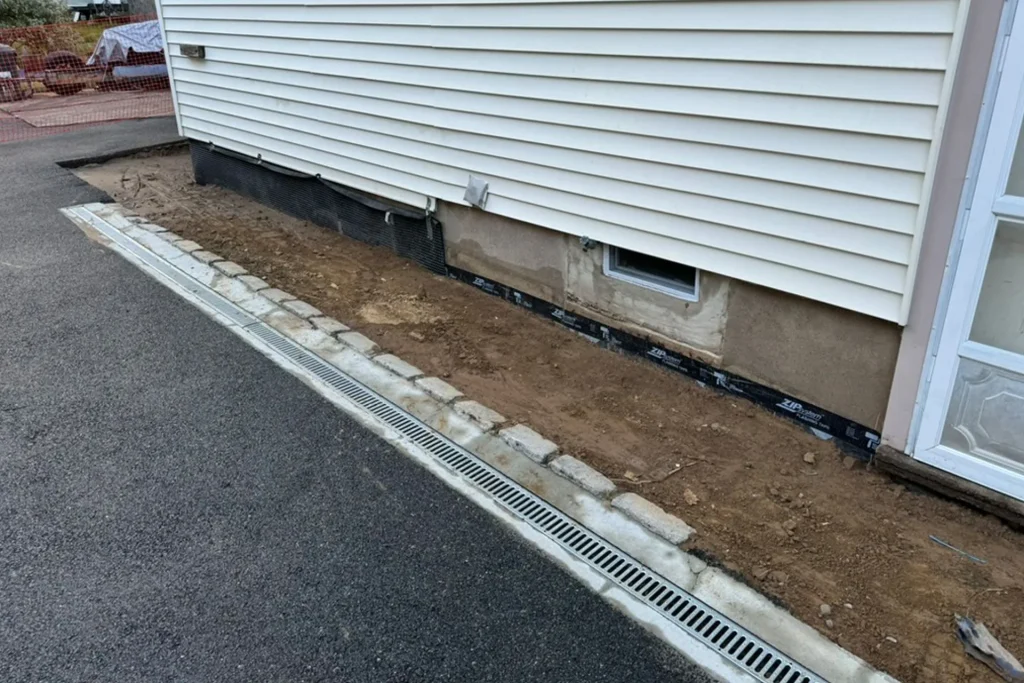
There are homes where exterior work is the better long-term answer, particularly when foundation walls are deteriorating, when there are major drainage failures outside, or when a finished basement needs the highest level of protection possible. Exterior waterproofing can involve excavation, foundation wall treatment, membrane application, drainage board installation, and footing drain improvements. It is disruptive, but in the right setting, it can be the most complete way to stop water before it reaches the wall assembly.
This approach tends to make the most sense when the property layout allows it, when landscaping can be restored sensibly, and when the homeowner is planning broader site work anyway. It can also be a smart move when a basement renovation is extensive and the owner wants to reduce moisture exposure at the foundation wall itself, not just manage seepage after the fact.
Still, it is not automatically the superior choice in every case. The best contractors explain the trade-offs clearly. Exterior systems can cost more, require excavation equipment, and run into complications with porches, walkways, attached garages, or close lot lines. Interior systems may solve the practical problem more efficiently. What matters is not ideology, but fit.
A livable basement needs dryness before finishes
This is where many projects go wrong. Homeowners get excited about turning the basement into useful living space and start with finishes first. They add flooring, paint, trim, and furniture before moisture control is solved. For a few months, everything looks fine. Then the familiar signs appear. A baseboard swells. Vinyl planks cup slightly. A corner starts smelling sour. Drywall near the slab darkens after rain.
Finishing a basement without proper waterproofing is like furnishing a room with a known roof leak. The problem may stay quiet for a while, but it will almost always reassert itself.
When waterproofing is done first, design options expand. Flooring choices become safer. Wall systems can be selected based on durability rather than wishful thinking. Storage can be built in confidently. Electrical planning becomes easier because the room is no longer treated as a semi-sacrificial zone. Even simple upgrades, such as better lighting and painted concrete, feel worthwhile when the basement is reliably dry.
I have seen homeowners completely change their plans once the waterproofing was complete. What started as "just make it less damp" turned into a compact den, a tidy laundry zone with cabinetry, or a quiet work-from-home setup. The square footage was always there. The limiting factor was trust.
How waterproofing supports real daily use
A more livable lower level is not always about adding a dramatic recreation room. Often it is about making ordinary routines easier.
Laundry gets less frustrating when baskets and linens do not pick up moisture. Storage becomes more organized when bins can sit against walls without fear. Seasonal decorations, sports gear, tools, and keepsakes can stay downstairs without constant second-guessing. Teenagers can use the basement as a hangout space. Guests can sleep there without feeling like they are in a backup area of the house. Remote workers can take calls without hearing the sump kick on every ten minutes because the room no longer struggles with unmanaged seepage and humidity.
For multigenerational households, this can be even more significant. In some New Jersey homes, the basement is one of the only realistic places to add semi-private living space for family. That raises the standard considerably. The space must feel stable, clean, and healthy, not merely dry enough to avoid puddles. Good waterproofing lays the groundwork for insulation, climate control, and finish materials that make occupancy comfortable over the long term.
Red flags homeowners should not ignore
Many serious basement problems begin with small warnings that are easy to normalize. A faint smell in late summer. Efflorescence on a foundation wall. Peeling paint near floor level. Rust on the bottom of metal shelving. Condensation that seems excessive. These are often dismissed because they do not look dramatic. But water damage is cumulative. Materials absorb, release, stain, weaken, and feed microbial growth over time.
A brief assessment can save a much larger repair later. If a homeowner notices repeated dampness after storms, unexplained moisture around the cove joint where wall meets floor, or a basement that needs constant dehumidification just to remain tolerable, that usually warrants a closer look. The cost of investigation is often minor compared with replacing damaged finishes, stored belongings, or compromised framing.
One practical rule holds up well: if you would hesitate to leave a cardboard box, an area rug, or a piece of upholstered furniture in the basement for six months, the space is not yet truly livable.
The value question, beyond resale language
People often ask whether basement waterproofing increases home value. It can, but the more useful question is what kind of value it creates for the current owner.
There is financial value in protecting the structure and avoiding recurring damage. There is market value in making the house more appealing to future buyers who will notice signs of moisture immediately. But there is also daily-use value, which is easier to underestimate. A dry basement gives a family room to spread out. It reduces stress during heavy rain. It protects stored belongings and mechanical systems. It allows renovation dollars to go into useful improvements instead of repeated cleanup.
In homes where square footage is tight, waterproofing can be one of the most cost-effective ways to gain functional living area without building an addition. The basement already exists. The ceiling height may be workable. Utilities are already nearby. Once moisture is controlled, even modest finishing can produce meaningful usable space. Compared with the cost of moving or expanding outward, making the lower level reliable can be a very sensible investment.
Choosing the right contractor matters as much as the system
Basement waterproofing is full of strong opinions and uneven workmanship. Homeowners should expect a contractor to inspect carefully, explain the source of the problem, and recommend a solution that matches the home rather than forcing every issue into the same package.
A credible evaluation usually covers both exterior and interior conditions. That means looking at grading, gutters, discharge points, cracks, staining patterns, humidity levels, and how the basement is currently used. If someone proposes a full system within minutes without asking many questions, that is a sign to slow down.
A good contractor should be able to explain why a certain approach is appropriate, what it will and will not do, and what maintenance the homeowner should expect. Clarity matters. Waterproofing can involve a meaningful investment, and it affects future remodeling, storage, and occupancy decisions. The homeowner should understand not just the price, but the logic.
Here are a few questions worth asking during that process:
- Where is the water most likely entering, and what evidence supports that?
- Do you recommend exterior corrections, interior drainage, or both?
- How will this affect future finishing materials and layout choices?
- What maintenance should I expect for pumps, drains, or discharge lines?
- What happens during severe storms or power outages?
Those questions often reveal whether a contractor is thinking about livability, not just installation.
Basement Waterproofing NJ as a foundation for better space
In New Jersey, a dry basement is never just a technical achievement. It is a quality-of-life upgrade.
Once water and moisture are brought under control, the lower level starts working with the rest https://eduardoeyou097.wpsuo.com/basement-waterproofing-nj-and-foundation-crack-repair-what-to-know of the house instead of against it. It becomes easier to heat, easier to clean, easier to organize, and far more comfortable to occupy. Odors fade. Finishes last longer. Storage stops feeling risky. Renovation plans become realistic.
That is the real promise behind Basement Waterproofing NJ. It is not simply about avoiding damage, although that matters. It is about unlocking space that homeowners already have but cannot fully use until they can trust it. A livable lower level begins with dryness, but it does not end there. It extends into comfort, health, flexibility, and the quiet confidence that a storm outside does not have to dictate how the basement feels inside.
ARD Waterproofing
Address: 98 Smull Ave, West Caldwell, NJ 07006
Phone number: +12016465936
FAQ About Basement Waterproofing NJ
What is the best waterproofing method for a basement?
The best overall approach to waterproofing a basement is a combined exterior and interior system that stops water at the foundation wall and safely manages any moisture that gets through.
What is the average cost to waterproof a basement?
The average cost to waterproof a basement ranges from $2,500 to $15,000, with most homeowners paying around $5,200 for a complete project.
Can a basement be waterproofed from the inside?
Yes, a basement can be waterproofed from the inside, and it is often the most affordable and least disruptive method.